Install
Full-broadcast flake: keeping a wet edge on big garage pours
How to sequence base coat and broadcast so you never trap yourself or bury a cold joint.
By Install team · Aug 28, 2026 · 6 min read
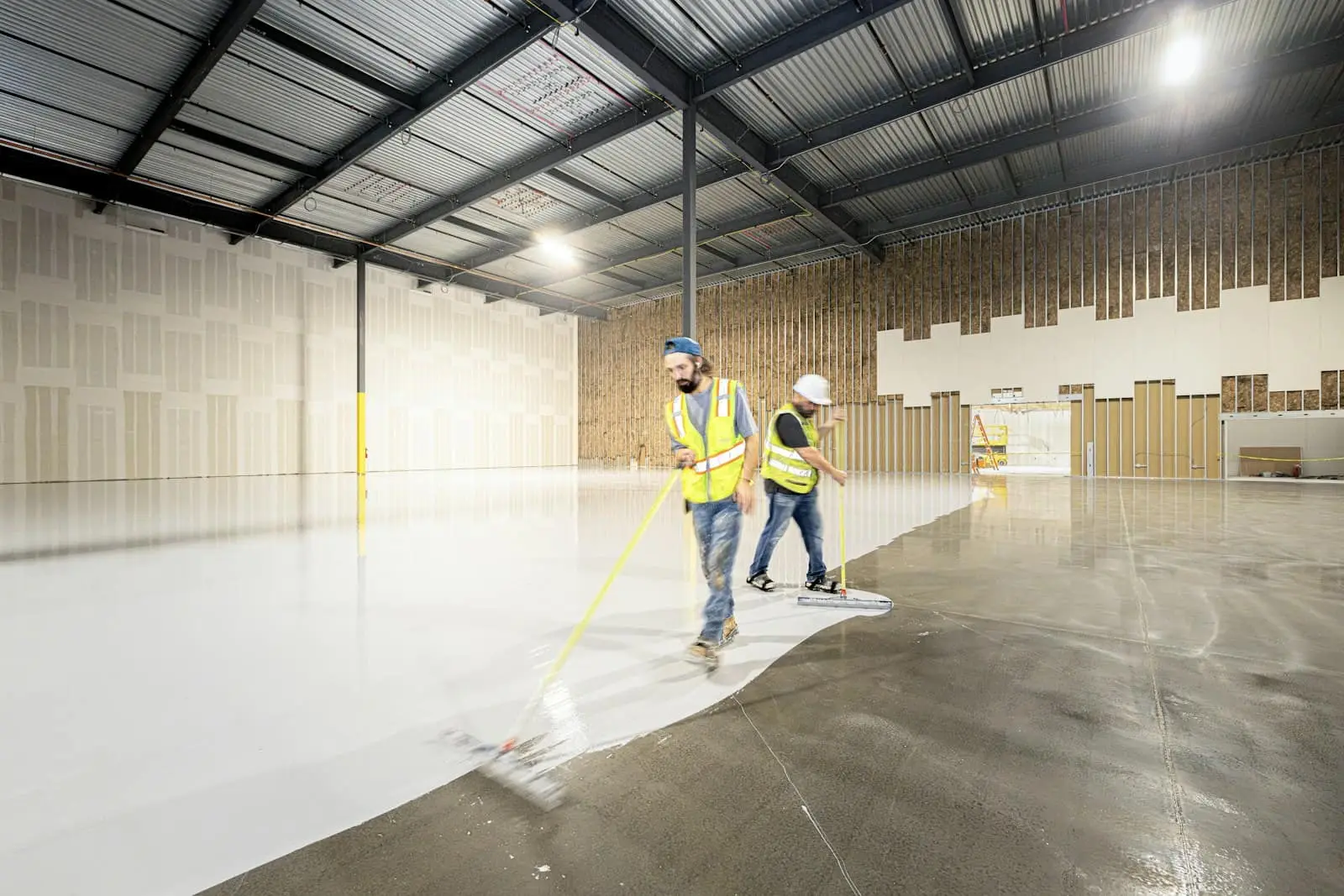
On a two- or three-car garage the enemy isn't the product — it's the clock. A 100% solids base gives you 25–30 minutes in the pail and a little longer on the floor, so the order you work in matters more than how fast you move.
Work in lanes, not laps
Split the floor into 4–6 ft lanes running away from the exit. Roll a lane of base, then broadcast it while the next lane is being rolled. The flake always lands on wet material, and the roller never has to reach over a broadcast area.
Toss up, not down
Flake thrown at the floor sinks and clusters. Toss it up and let it rain down so it lands flat and evenly. Broadcast to refusal — when the surface stops absorbing chips and no wet spots show through.
Scrape, vacuum, then grout or topcoat
After cure, scrape with a floor scraper at a low angle to knock off loose and standing chips, vacuum twice, and then apply a grout coat or go straight to a polyaspartic topcoat.
Ready to put this into practice?
Shop the systems our crews use, or ask a tech rep to spec your job.
More from the workshop
System specAug 14, 2026 · 8 min
Topcoat showdown: polyaspartic or aliphatic urethane for retail?
Cure speed, abrasion, sheen retention and cost — how we choose for storefronts and showrooms.
Read articlePrepJul 30, 2026 · 5 min
CSP 2 vs CSP 3: a field guide to concrete surface profiles
What the ICRI chips actually mean, and why mechanical prep beats acid etching for solids systems.
Read articleBusinessJul 16, 2026 · 7 min
How to quote a two-car garage in ten minutes
A simple per-square-foot framework that covers material, labor, prep surprises and margin.
Read article